1875 25C BG-797 (Regular Strike)
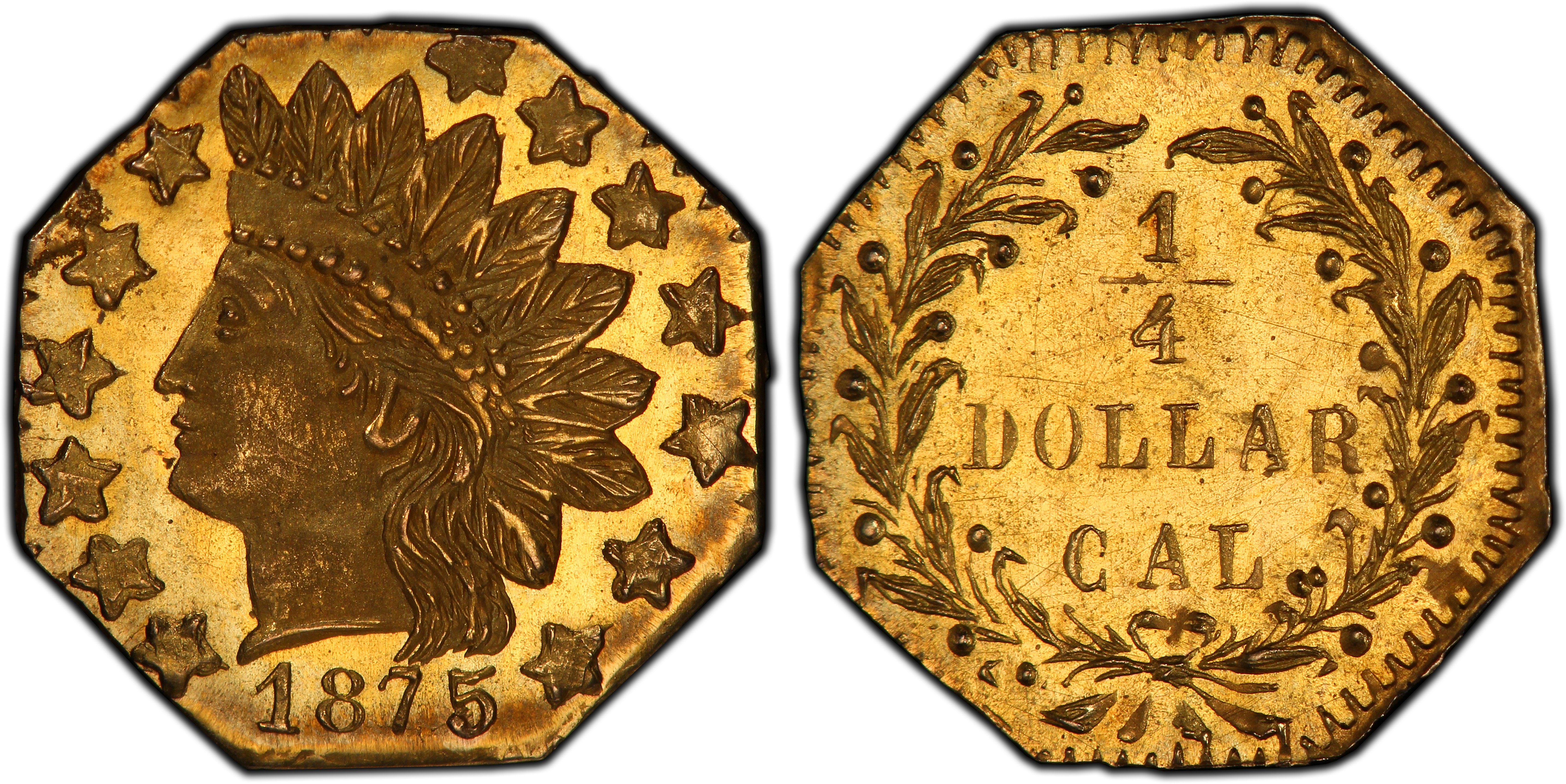
Obverse & Reverse
The 1875 25C BG-797 is a quintessential example of a 'Period Two' California Fractional Gold piece. The story of these fascinating miniature gold coins begins with the California Gold Rush. The massive influx of population after 1848 created a dynamic but chaotic economy where gold dust was plentiful, but standardized small-denomination coinage was critically scarce. To fill this commercial void, private jewelers and metallurgists began striking their own coins in 25-cent, 50-cent, and one-dollar denominations starting in 1852. These initial 'Period One' (1852-1856) issues were genuinely intended for circulation and were accepted in local commerce, albeit often with a gold content below their face value. By the late 1850s, the San Francisco Mint was in full operation, alleviating the small-change shortage. This marked a fundamental shift in the purpose of fractional gold. The 'Period Two' issues, struck from 1859 to 1882, were no longer essential for commerce but instead catered to a burgeoning market for souvenirs and curiosities. Tourists, settlers, and those back East were captivated by the romance of the Gold Rush, and these tiny gold coins were the perfect memento. The BG-797, dated 1875, falls squarely into this era. Struck by an unknown private minter, likely one of the many jewelers operating in San Francisco, it was created as a keepsake, not as money. This is evidenced by the high survival rate in Mint State condition; they were purchased and saved, not spent. The Coinage Act of 1864 had made private coinage illegal, but the law was not strictly enforced against these small souvenir pieces until the Secret Service cracked down in the early 1880s, bringing the era of legitimate fractional gold production to a close. The BG-797, with its classic Indian Head motif, represents the romantic, commercialized memory of the Gold Rush, a tangible link to an era that had already transitioned from rugged reality to national legend.
Associated EventCalifornia Gold Rush aftermath and tourism boom
Reason For MintingPrimarily produced as a popular and affordable souvenir for tourists and collectors, capitalizing on the romantic legacy of the Gold Rush.
Minter HistoryThe specific minter or jeweler who produced the BG-797 variety is unknown, which is common for Period Two issues. Unlike some earlier pieces that bore initials or identifiable punches, many souvenir-era fractionals were made anonymously by various San Francisco-based artisans who possessed the skills to create dies and strike coins for the robust tourist trade.
Historical SignificanceAs a Period Two issue, the BG-797's significance lies not in its use as circulating currency, but as a cultural artifact. It demonstrates the commodification of the Gold Rush experience and the high demand for transportable, affordable souvenirs made of the very metal that defined the era. It is a numismatic representation of California's transition from a raw frontier to a destination of national fascination.
N/A
Denomination25 Cents
Minting Period1875
Assayer/MinterUnknown
Geographic OriginSan Francisco, California
Obverse DescriptionA stylized Indian Head facing left, a design reminiscent of the contemporary U.S. one-dollar gold piece. The portrait is typically surrounded by thirteen six-pointed stars representing the original colonies. The date, 1875, appears below the bust.
Obverse Inscription1875
Reverse DescriptionThe denomination '1/4 DOL.' is contained within a decorative wreath of leaves and berries, open at the top. The 'DOL.' is sometimes found directly below the fraction.
Reverse Inscription1/4 DOL.
CompositionGold
Stated Fineness Actual FinenessVariable, typically between .500 and .750 fine. Period Two pieces were not made to a consistent monetary standard.
EdgePlain
0
Survival Estimate75-125. Based on combined PCGS and NGC population reports totaling over 50 unique coins, with an allowance for raw and unsubmitted examples.
Rarity ScaleR-4 (Scarce, 76-200 known)
The BG-797 is popular due to its classic Indian Head design, octagonal shape, and status as a genuine relic of the post-Gold Rush era. It is one of the more available Period Two varieties, offering collectors an accessible entry point into this fascinating field without the extreme rarity of Period One issues.
Key VarietiesNo major varieties are noted for the BG-797 regular strike itself. As a 'Period Two' issue, it is considered a business strike intended for private sale, not circulation. No proof or special presentation strikings from the period of issue are known to exist. Later imitations and replicas are common for the general type but are not considered part of the Breen-Gillio catalog.
Authentication TipsAuthentic BG-797s are typically very thin and lightweight. The strike can be uneven, with some softness in the details, a result of manual screw press or hammer striking. Counterfeits are often thicker, have a soapy or cast-like appearance, incorrect luster, and may feature a bear on the reverse—a motif never used on genuine 19th-century issues. The diagnostics of the wreath and the font used for the denomination on the reverse should be carefully compared to known genuine examples. Third-party grading is highly recommended.
Shopping ConsiderationsA premium quality example for its grade will exhibit a sharp strike, particularly on the feathers of the Indian's headdress. Luster is a key factor; many surviving examples are uncirculated and should have bright, prooflike or 'watery' fields. Look for pleasing original gold toning, which can range from a light yellow to a deeper orange-gold. Common problems to avoid are cleaning, which imparts hairlines and strips the original surface, and damage such as bends or evidence of being mounted in jewelry. Given their souvenir nature, high-grade examples (MS63 and above) are the norm and should be sought.
A coin's grade is its condition, rated on a 1-70 scale. For rare coins, this is the most critical factor in determining value, as a tiny difference in preservation can mean a huge difference in price.
Relevant Grade TypesOriginal period issues were business strikes intended for private sale as souvenirs. The vast majority of surviving examples are found in Mint State (MS, 60-70) grades because they were saved rather than spent. Circulated (1-58) examples are uncommon and suggest incidental handling rather than intentional commercial use. No proofs were struck during the original period of issue.
Mint State CharacteristicsUncirculated examples of BG-797 are characterized by their luster, which is often semi-prooflike with reflective fields. The strike can be variable; a sharp, fully detailed headdress and wreath are highly desirable and command a premium. Due to the primitive minting process, it is common to see minor planchet irregularities or a slightly uneven strike across the coin's surface. Small, non-distracting contact marks are typical and acceptable, but large or deep marks will significantly impact the grade and value.
Circulated Wear PatternsOn circulated examples, wear first appears on the highest points of the design. For the obverse, this includes the cheek, brow, and the feathers of the headdress. On the reverse, the highest points of the wreath leaves and the edges of the fraction will show rubbing and loss of detail first. In lower grades, the stars and legends will begin to weaken.
Key Factors For ValueThe primary value drivers for an 1875 25C BG-797 are grade and eye appeal. A sharply struck coin with brilliant, prooflike surfaces will always be worth more than a softly struck or lackluster example of the same grade. Originality is paramount; coins with their natural 'skin' and attractive toning are prized over those that have been cleaned or dipped. A CAC sticker, indicating premium quality for the grade, adds a significant premium for this and other California Fractional Gold issues.
PCGS Price Guide
| Grade | Price | Population |
|---|---|---|
| 55 | $195.00 | 1 |
| 55+ | $200.00 | N/A |
| 58 | $210.00 | 1 |
| 58+ | $220.00 | N/A |
| 60 | $235.00 | 1 |
| 61 | $250.00 | 2 |
| 62 | $275.00 | 26 |
| 62+ | $300.00 | N/A |
| 63 | $350.00 | 28 |
| 63+ | $400.00 | 1 |
| 64 | $525.00 | 37 |
| 64+ | $575.00 | N/A |
| 65 | $725.00 | 19 |
| 65+ | $900.00 | N/A |
| 66 | $1,400.00 | 5 |
| 67 | N/A | N/A |