1873/2 G25C BG-792 (Regular Strike)
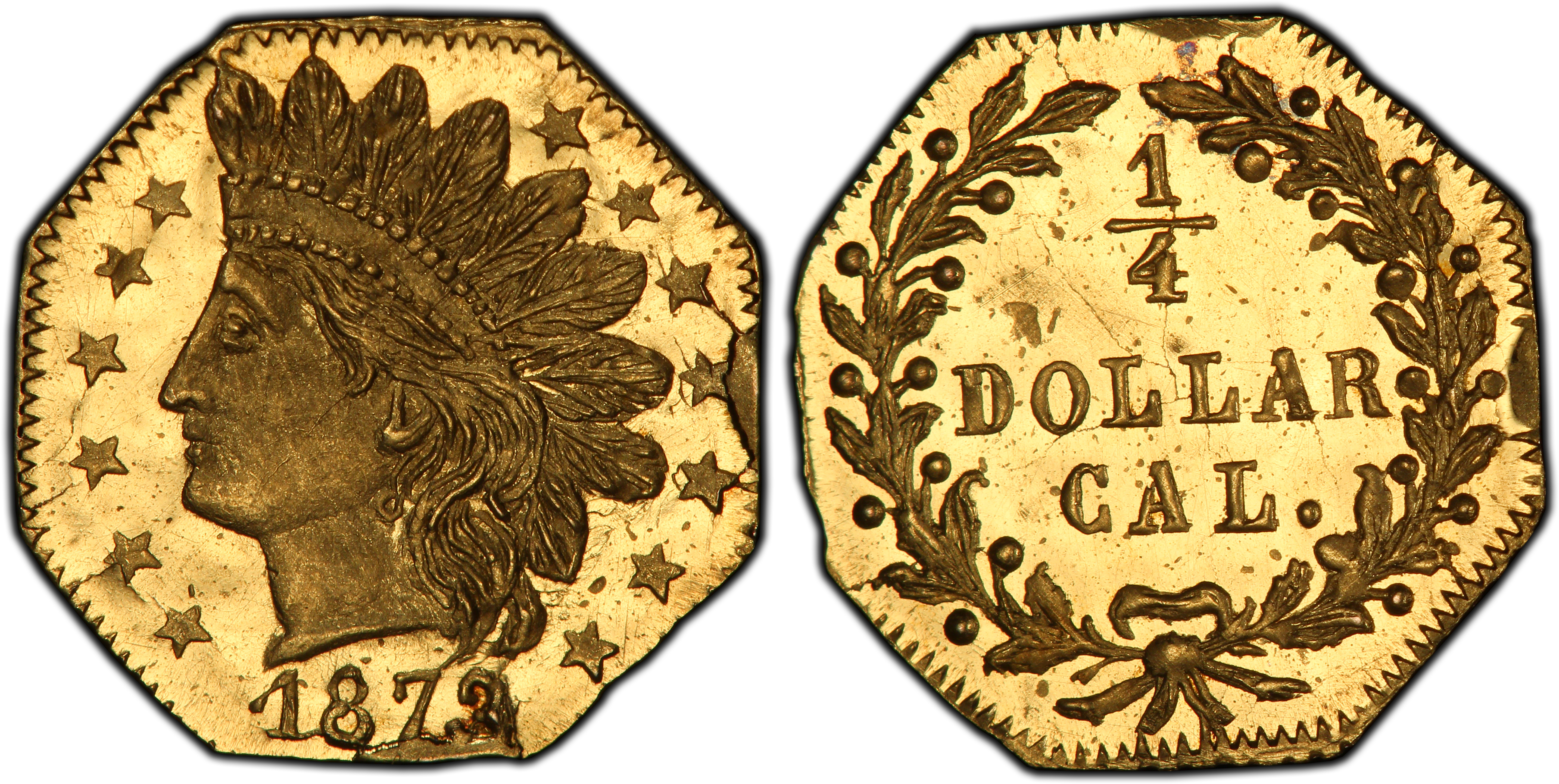
Obverse & Reverse
The 1873/2 G25C BG-792 is a fascinating artifact from the second phase of California's fractional gold production, a period numismatists designate as 'Period Two' (1858-1882). Unlike their 'Period One' predecessors, which were struck out of genuine commercial necessity to alleviate a severe shortage of small change during the initial Gold Rush, Period Two pieces were primarily created as souvenirs and keepsakes. By the 1870s, the San Francisco Mint was in full operation, supplying the region with ample federal coinage and eliminating the practical need for privately issued gold. However, the romance of the Gold Rush had captured the public imagination, and jewelers in San Francisco capitalized on this by producing these miniature gold tokens for tourists and collectors. These 'jeweler's issues' were not intended for circulation and were often underweight relative to their face value, functioning more as attractive mementos than true currency. The Coinage Act of 1864 had made private coinage illegal, but the law was not strictly enforced against these small souvenir pieces until the Secret Service cracked down in 1883. The BG-792 is a prime example of the manufacturing practices of the era. It is an 'overdate,' where an existing die from 1872 was re-punched with a '3' to create coinage for 1873, a common cost-saving measure for private minters. This specific variety is exceptionally rare, classified as Rarity-7-, indicating a survival of fewer than a dozen specimens. Their scarcity is a result of low initial production numbers; these were not mass-produced items but rather crafted in small batches by skilled artisans for a niche market. Today, the BG-792 is highly prized not as a coin that financed Gold Rush commerce, but as a rare and tangible link to the enduring legacy and popular culture of that transformative era.
Associated EventCalifornia Gold Rush Aftermath
Reason For MintingPrimarily struck as a souvenir or 'pocket piece' for the tourist and collector trade, not for general circulation.
Minter HistoryThe specific minter for the BG-792 die pair is unknown, as is common for many Period Two varieties. These pieces were generally produced by various jewelers operating in San Francisco, many of whom were of French origin. They used their skills in metalworking to create these popular and profitable souvenir tokens. Unlike Period One minters who sometimes hallmarked their work, Period Two makers often remained anonymous, their identities now lost to history.
Historical SignificanceThe BG-792 represents the commercial evolution of California fractional gold from a necessary form of currency to a nostalgic souvenir. Its status as a rare overdate provides insight into the frugal and practical methods of private manufacturers. It is a numismatic relic that captures the public's romantic fascination with the Gold Rush long after its commercial urgency had passed.
BG-792
Denomination25 Cents
Minting Period1873
Assayer/MinterUnknown San Francisco Jeweler
Geographic OriginSan Francisco, California
Obverse DescriptionOctagonal planchet. Features a stylized Indian Head portrait facing left, wearing a feathered headdress. The portrait is surrounded by 13 five-pointed stars. The date, 1873, appears below the bust, with the '3' clearly struck over a '2'.
Obverse Inscription1873
Reverse DescriptionOctagonal planchet. The denomination '1/4 DOLLAR' is inscribed in two lines at the center, enclosed within a continuous wreath of leaves and berries. The wreath is open at the top.
Reverse Inscription1/4 DOLLAR
CompositionGold
Stated Fineness Actual FinenessVaries, typically 14 to 22 karats for Period Two issues.
Weight0.25 grams
Diameter9.80 mm
EdgePlain
Extremely Low
Survival EstimateFewer than 12 known
Rarity ScaleR-7-
This variety is highly sought after due to its extreme rarity as a R-7- issue and its desirable overdate feature, which is clearly visible. As an octagonal Indian Head type from the popular California Fractional Gold series, it appeals to a wide range of collectors.
Key VarietiesThe primary variety is the 1873/2 overdate itself. No later-date restrikes or special collector issues are known to exist for this specific Breen-Gillio number.
Authentication TipsThe key diagnostic is the clear repunching of the 3 over the 2 in the date; traces of the underlying 2 should be visible under magnification. Look for a die lump or artifact around the base of the final digit, a common feature on similar overdates. The strike is often weak in areas, a characteristic of the hammer-striking process used. Be wary of modern replicas which often have a soapy, cast-like appearance, incorrect weight, and lack the denomination, or feature designs (like bears) not found on genuine Period Two issues. All genuine pieces from this era are denominated.
Shopping ConsiderationsA premium quality example for this issue is one where the overdate is bold and unambiguous. Look for sharp details on the high points of the headdress feathers and the wreath. Surfaces should exhibit some degree of prooflike or reflective fields, a common characteristic of these later-date jeweler's issues. While contact marks are common due to the small size and softness of the gold, seek out a specimen with minimal distracting marks on the obverse portrait. Avoid examples that have been holed, bent, or harshly cleaned, as these significantly impair value. Original, reddish-gold toning is highly desirable.
A coin's grade is its condition, rated on a 1-70 scale. For rare coins, this is the most critical factor in determining value, as a tiny difference in preservation can mean a huge difference in price.
Relevant Grade TypesOriginal period issues were business strikes, although not intended for circulation, and are found in Mint State (MS, 60-70) grades. Due to their nature as souvenirs, circulated examples are scarce but do exist, typically in higher grades (AU 50-58). No true Proof (PR/PF) examples were struck during the original period of issue. The term 'Prooflike' (PL) is often used to describe specimens with highly reflective, mirror-like surfaces, which resulted from striking on polished planchets, and these command a premium.
Mint State CharacteristicsUncirculated examples of BG-792 typically display a sharp, albeit sometimes uneven, strike due to the hammer-striking process. Luster is often flashy and prooflike. The central devices, such as the details of the face and headdress, may be softly struck. Small planchet flaws or striations are common and generally accepted for the issue. The key to a high-grade example is clean, mark-free fields and a bold overdate.
Circulated Wear PatternsOn circulated examples, wear first appears on the highest points of the design: the cheek of the Indian Head, the eyebrow, and the topmost feathers of the headdress. On the reverse, the high points of the wreath leaves and the fraction '1/4' will show initial friction and loss of detail. In lower grades, the stars and legends would begin to merge with the fields.
Key Factors For ValueThe primary value driver for a BG-792 is simply its existence, given its extreme rarity. Beyond that, the grade is paramount. A high-grade Mint State example (e.g., MS-64 or higher) will command a significant premium. Eye appeal is crucial; coins with original, lustrous surfaces and attractive toning are preferred over cleaned or dull specimens. The clarity and boldness of the 1873/2 overdate is a major factor, with stronger overdates being more desirable. Certification by PCGS or NGC is essential for market acceptance, and a CAC sticker would add a further premium, confirming premium quality for the assigned grade.
PCGS Price Guide
| Grade | Price | Population |
|---|---|---|
| 60 | $1,000.00 | 1 |
| 61 | $1,200.00 | N/A |
| 62 | $1,500.00 | 2 |
| 62+ | $1,700.00 | N/A |
| 63 | $2,250.00 | 1 |
| 63+ | $2,600.00 | N/A |
| 64 | $3,000.00 | 6 |
| 64+ | $3,350.00 | N/A |
| 65 | $3,750.00 | 2 |