1868 G25C BG-747 (Regular Strike)
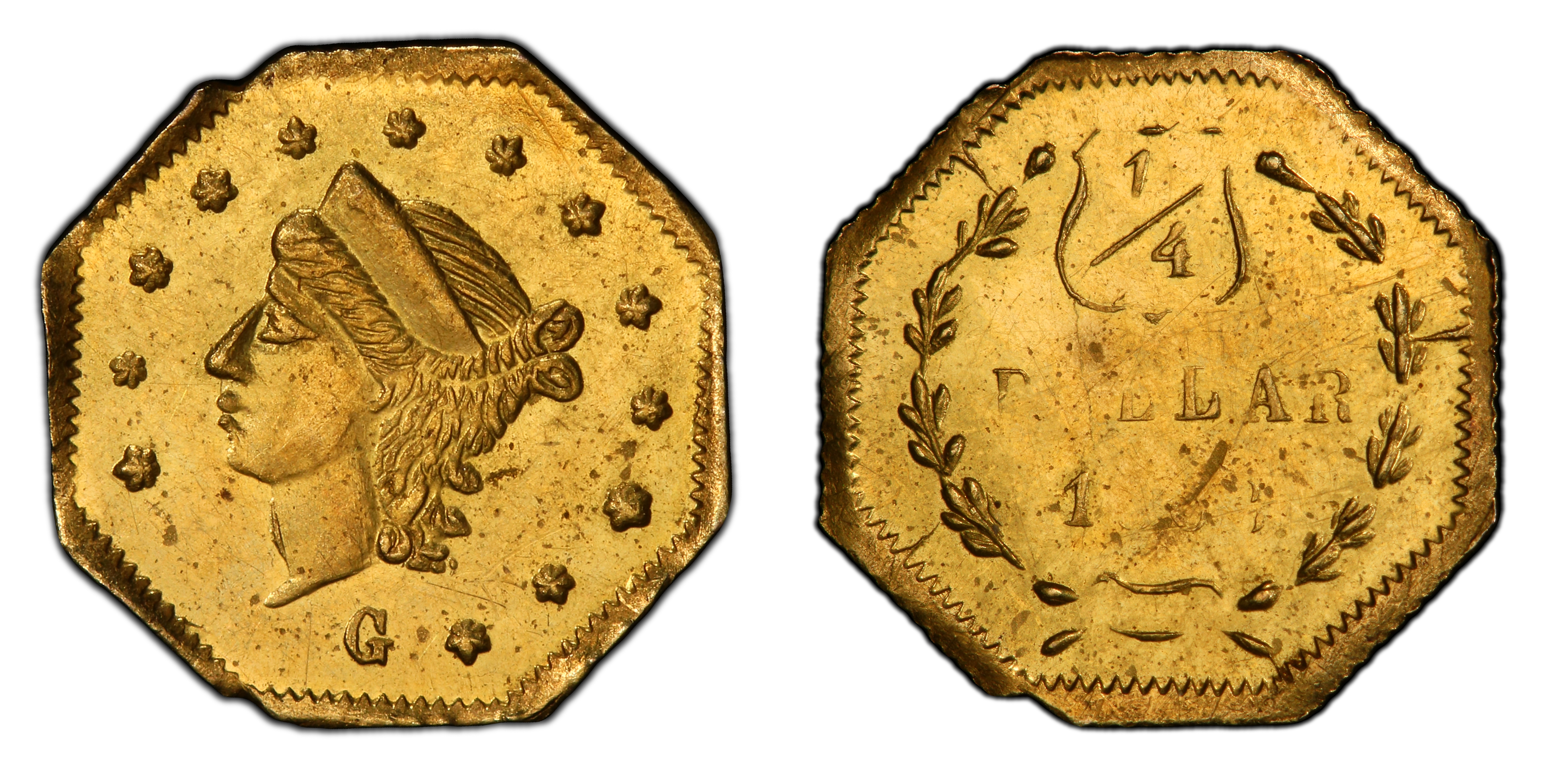
Obverse & Reverse
The 1868 BG-747 25 Cent piece emerges from the second period (1859-1882) of California Fractional Gold production, a fascinating and complex chapter in American numismatics. The initial impetus for these tiny gold coins in the early 1850s was a genuine and severe shortage of small-denomination coinage for daily commerce in the wake of the Gold Rush. Gold dust and nuggets were impractical for minor transactions, and the federal government was slow to supply the booming West with sufficient coinage. By 1868, however, the economic landscape had evolved. The San Francisco Mint was in full operation, and the most acute phase of the coin shortage had passed. The continued production of fractional gold pieces shifted from a primarily utilitarian function to serving a burgeoning souvenir and jewelry market. These 'Period Two' issues, often called 'jeweler's pieces,' were typically smaller, lighter, and of lower fineness than their Period One predecessors. They catered to tourists and locals who desired a tangible, golden memento of the California dream. The Coinage Act of 1864 had made the private issuance of coinage illegal, but the law was not strictly enforced against these small tokens until the early 1880s, allowing their production to continue. The BG-747, like its contemporaries, was likely struck using a hammer method, where a planchet was placed between two dies and struck manually, leading to significant variations in strike quality. The anonymous nature of its minter is characteristic of the era, as jewelers sought to avoid potential legal entanglements with the U.S. Secret Service, which was beginning to crack down on private coinage. These pieces are not just curiosities; they are artifacts of a transitional period in California's economy, reflecting a maturing society that was beginning to mythologize and commercialize its own recent past.
Associated EventPost-Gold Rush Economic Development
Reason For MintingPrimarily created to satisfy the demand for souvenirs and novelty items for tourists and locals in post-Gold Rush California.
Minter HistoryThe specific minter of BG-747 is unknown, which is common for Period Two fractional gold. Most manufacturers during this period were San Francisco jewelers, such as Frontier, Deviercy & Co., or Deriberpe & Nouizillet, who often did not place their own identifying marks on the coins to avoid prosecution after the Private Coinage Act of 1864. They produced these pieces for a commercial market that valued them as keepsakes rather than circulating currency.
Historical SignificanceThe BG-747 is significant as a representative of the 'souvenir' phase of California Fractional Gold. It illustrates the shift from privately minted coins made out of necessity for commerce to tokens created to capitalize on the romantic appeal of the Gold Rush. Its existence highlights a legal gray area in U.S. monetary law and the persistent entrepreneurial spirit of California's artisans.
N/A
Denomination25 Cents
Minting Period1868
Assayer/MinterUnknown private minter, likely a San Francisco jeweler.
Geographic OriginSan Francisco, California
Obverse DescriptionA Liberty Head facing left, similar in style to the contemporary federal gold coinage, but cruder in execution. The portrait is surrounded by thirteen stars, representing the original colonies.
Obverse Inscription[No Inscription]
Reverse DescriptionThe denomination '1/4' is in the center, surrounded by a wreath of leaves. The date '1868' is positioned below the wreath. The design elements are often weakly struck and may appear attenuated due to die lapping.
Reverse Inscription1/4 1868
CompositionGold
Stated Fineness Actual FinenessVariable, often below the .900 standard of federal coinage for Period Two issues.
Diameter9.70 mm
EdgePlain
Unknown, but very low.
Survival EstimateFewer than 30 believed to exist.
Rarity ScaleR-5+ (High R-5)
This coin is sought after for its tangible connection to the California Gold Rush era, its octagonal shape, and its defined rarity. As part of the extensive and popular California Fractional Gold series, it appeals to specialists who enjoy the challenge of collecting by Breen-Gillio (BG) number and die state.
Key VarietiesThe BG-747 is itself a specific die marriage. It is important to distinguish it from the similar BG-745, with which it shares a reverse die. According to numismatic literature, the reverse elements on the BG-747 appear more attenuated or 'thinner' due to heavy die lapping (polishing). There are no known regular-issue varieties, patterns, or restrikes for this specific catalog number.
Authentication TipsAuthenticity is a primary concern with fractional gold. Genuine pieces should exhibit a somewhat crude, hand-struck appearance. Look for the correct die markers that distinguish BG-747, particularly the lapped reverse die characteristics. Weight and specific gravity tests can help identify contemporary counterfeits or modern replicas, which are often made of brass or are gold-plated. The luster on an original should be soft and satiny, not the hard, reflective shine of many modern fakes. Third-party certification by PCGS or NGC is highly recommended.
Shopping ConsiderationsA premium quality example of BG-747 would exhibit a sharp strike for the issue, with clear details on Liberty's hair and the wreath on the reverse. Given the manufacturing process, perfectly struck specimens are virtually nonexistent. Look for smooth, problem-free surfaces with minimal contact marks and original, uncleaned luster. Avoid examples that are described as 'holed and plugged' or show evidence of being mounted in jewelry, as was common. The eye appeal is paramount; a coin with a pleasing, uniform reddish-gold color will command a significant premium over a dull or cleaned specimen.
A coin's grade is its condition, rated on a 1-70 scale. For rare coins, this is the most critical factor in determining value, as a tiny difference in preservation can mean a huge difference in price.
Relevant Grade TypesOriginal period issues were business strikes. As they saw little to no actual circulation, they are typically encountered in Circulated (AU-55 to 58) and, more commonly, Mint State (MS, 60-70) grades. No Proofs were struck during the original minting period for this issue, and there are no known later-date collector restrikes.
Mint State CharacteristicsIn uncirculated grades, the quality is defined by the strength of the strike and the preservation of the surfaces. A typical MS example of BG-747 will likely show some weakness in the center of both the obverse and reverse due to the nature of manual hammer striking. Luster is typically soft and satiny. Small planchet flaws or adjustment marks made before striking are not uncommon and should be distinguished from post-striking damage. High-grade examples (MS-63 and above) are scarce and prized for their sharp details and clean fields.
Circulated Wear PatternsFor the few examples that might show circulation, wear would first appear on the highest points: Liberty's cheek, hair, and the highest leaves and bow of the wreath on the reverse. In lower grades (e.g., AU-55), these high points will show a slight flattening and a dulling of the original mint luster.
Key Factors For ValueFor the 1868 BG-747, value is driven by several key factors. Rarity is paramount, as it is a High R-5 variety. The certified grade is the next most important factor. Surface quality is crucial; an example with clean, original surfaces will be worth significantly more than one with scratches, cleaning hairlines, or other impairments. Strike sharpness greatly affects eye appeal and value. Finally, a CAC sticker, indicating premium quality for the grade, will add a substantial premium for this and other scarce territorial issues.
PCGS Price Guide
| Grade | Price | Population |
|---|---|---|
| 53 | $300.00 | 1 |
| 53+ | $325.00 | N/A |
| 55 | $350.00 | 3 |
| 55+ | $365.00 | N/A |
| 58 | $400.00 | 1 |
| 58+ | $425.00 | N/A |
| 60 | $475.00 | N/A |
| 61 | $525.00 | 8 |
| 62 | $625.00 | 9 |
| 62+ | $750.00 | N/A |
| 63 | $1,000.00 | 3 |
| 64 | N/A | N/A |