No Date G25C BG-209B (Regular Strike)
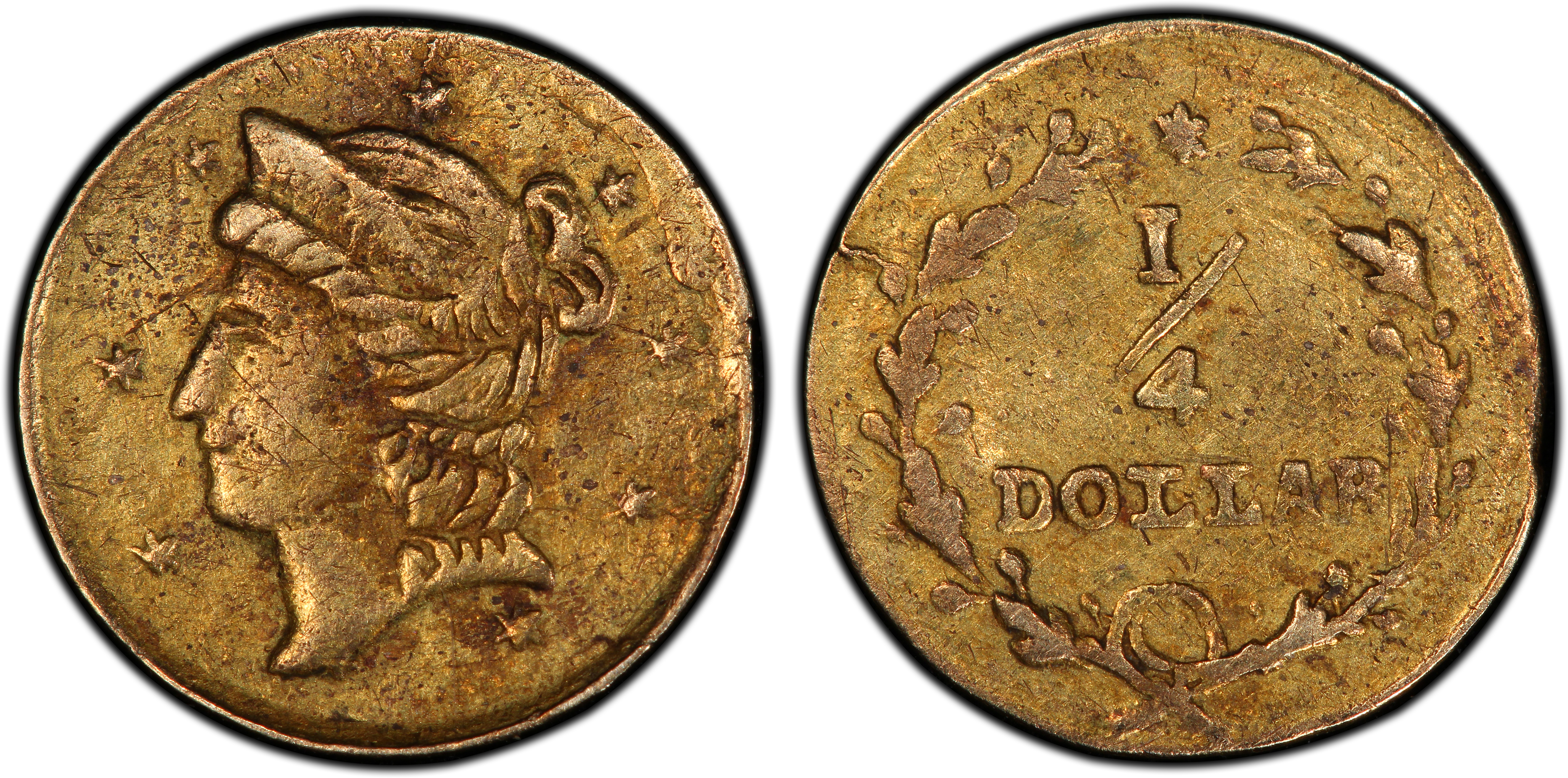
Obverse & Reverse
The No Date (c. 1853) Gold Quarter Dollar, cataloged as Breen-Gillio 209B, is a fascinating and enigmatic product of the California Gold Rush. This tumultuous period, beginning in 1848, drew hundreds of thousands of prospectors and merchants to the West Coast. The massive influx of population and the sudden abundance of raw gold dust created a severe economic paradox: while immense wealth was being extracted from the ground, there was a chronic shortage of official circulating coinage, particularly for small, everyday transactions. A 'pinch' of gold dust, an inexact and often contentious measure, was initially used for minor purchases, but this was unsustainable for a burgeoning economy. To fill this critical monetary gap, numerous private jewelers and metallurgists in San Francisco began striking their own small-denomination coins in 1852. These 'California Fractional Gold' pieces, issued in 25-cent, 50-cent, and one-dollar denominations, were the lifeblood of small commerce before the San Francisco Mint began full-scale operations in 1854. The BG-209B is classified as a 'Period One' (1852-1857) issue, a group of coins generally believed to have been created for actual circulation. However, the BG-209B stands as a significant anomaly. Numismatic research, notably by experts like Mike Locke, indicates that this variety is thinly gold-plated over a base metal core or struck in very low-grade gold. This is highly unusual for Period One issues, which, while often underweight, were typically made of solid gold alloy. This suggests the BG-209B may have been a contemporary counterfeit intended to defraud, or perhaps an experimental piece. Its true purpose remains a subject of numismatic debate, adding to its allure. As an R-8 (Extremely Rare) variety, its survival is counted in single digits, making any appearance a significant event in the numismatic community. Its story encapsulates not only the ingenuity of private enterprise in the Old West but also the potential for deception in a chaotic, gold-fueled economy.
Associated EventCalifornia Gold Rush
Reason For MintingTo alleviate a severe shortage of small-denomination coinage for daily commercial transactions in Gold Rush-era California.
Minter HistoryThe specific minter for the BG-209B variety is unknown, a common trait for many Period One California Fractional Gold issues. Most of these early pieces were produced by San Francisco jewelers, many of French origin, who possessed the requisite skills for engraving dies and striking small coins. They operated in a semi-legal gray area, fulfilling a genuine economic need before the establishment of a federal branch mint. Unlike later, more organized private minters, these early artisans rarely signed their work, leaving a legacy of fascinating but often anonymous coinage.
Historical SignificanceThis coin is historically significant as an example of the private currency that enabled commerce during the chaotic early years of the California Gold Rush. More specifically, its unusual plated composition makes it a subject of numismatic study, representing either a contemporary attempt at counterfeiting or a unique production anomaly from a period of unregulated minting. As one of the rarest varieties of Period One fractional gold, it is a testament to the diverse and sometimes mysterious nature of the West's first privately issued coins.
N/A
Denomination$0.25
Minting Periodc. 1853
Assayer/MinterUnknown Private Minter
Geographic OriginSan Francisco, California
Obverse DescriptionFeatures a small, classic Liberty Head design facing left, reminiscent of the style used on contemporary federal gold dollars. The portrait is surrounded by thirteen six-pointed stars, representing the original colonies. The piece is undated.
Obverse Inscription Reverse DescriptionA simple wreath of two olive branches, tied with a bow at the bottom, encircles the denomination. The denomination is expressed with the fraction '1/4' on the top line and the word 'DOLLAR' below it.
Reverse Inscription1/4 DOLLAR
CompositionGold-plated base metal or very low-grade gold alloy
Stated Fineness Actual FinenessUnknown, but suspected to be extremely low or merely a plating.
EdgePlain
Unknown, but presumed to be extremely small.
Survival EstimateFewer than 4 known
Rarity ScaleR-8
The BG-209B is a legendary rarity in the California Fractional Gold series. Its appeal is multi-faceted: it is a Period One issue, it is extremely rare (R-8), and it possesses the profound numismatic mystery of being gold-plated, which challenges its classification and original intent. It is a pinnacle acquisition for the most advanced specialists in pioneer gold.
Key VarietiesThe BG-209B itself is a key variety. There are no known major sub-varieties from the original minting period. No special collector restrikes or patterns are known to exist. The primary numismatic distinction is between this plated BG-209B and the solid gold BG-209 variety.
Authentication TipsAuthentication of a BG-209B is exceptionally difficult and requires expert examination. The primary diagnostic is its composition; unlike most Period One fractionals, it should be tested for a base metal core or extremely low fineness. Look for any signs of plating wear on the highest points, such as small areas where a darker base metal shows through the gold. The strike is often crude compared to federal coinage. Diagnostics of the die state, including the exact position of stars and letters, must be compared to known genuine examples. Given its R-8 rarity, any newly discovered specimen should be considered suspect until professionally verified by a top-tier grading service with expertise in this specific series.
Shopping ConsiderationsAcquiring a BG-209B is a once-in-a-decade opportunity, typically occurring only in major auctions of landmark collections like that of Jay Roe. A 'premium quality' example for this issue would simply be one that is identifiable and not excessively damaged. Given its likely plated nature, look for minimal wear to the plating and an absence of corrosion or significant scratches that might expose the core. Strike quality is secondary to authenticity and surface preservation. Any potential buyer must insist on certification from PCGS or NGC, as the risk of encountering a sophisticated counterfeit is extremely high. The coin's provenance and auction history are of paramount importance.
A coin's grade is its condition, rated on a 1-70 scale. For rare coins, this is the most critical factor in determining value, as a tiny difference in preservation can mean a huge difference in price.
Relevant Grade TypesOriginal period issues of California Fractional Gold were business strikes intended for circulation. They are found in Circulated (1-58) and Mint State (MS, 60-70) grades. Due to the extreme rarity and likely limited (if any) circulation of BG-209B, surviving examples are most likely to be found in circulated grades, often with surface problems. No proofs were struck during the original period of issue, and no later-date Proof restrikes are known.
Mint State CharacteristicsA true Mint State example of this variety is likely hypothetical. If one were to surface, its quality would be judged on the completeness of the gold plating, the sharpness of the strike on Liberty's hair and the details of the wreath, and the quality of its luster. As these were crudely, often hand-struck coins, a fully sharp strike would be unusual. Marks and planchet flaws would be common and must be distinguished from post-striking damage.
Circulated Wear PatternsFor a Liberty Head fractional gold piece, wear first appears on the highest points of the design. On the obverse, this includes Liberty's cheek, the hair above the eye, and the ear. On the reverse, the high points of the wreath's leaves and the bow would show the first signs of friction. On a plated coin like the BG-209B, this friction would manifest as a dulling of the luster and, with progressive wear, the eventual removal of the gold plating, exposing the darker base metal beneath.
Key Factors For ValueFor a specimen of this legendary rarity, the primary factor for value is simply its existence and authenticity. A clear, verifiable provenance linking it to a famous collection would add a massive premium. Beyond that, the state of preservation is key, with a focus on the integrity of the surfaces. An example with minimal impairment, intact plating (if applicable), and clear design elements would command a significantly higher price than a damaged or heavily worn specimen. Eye appeal, while subjective, is important; an example with a pleasing, original look will always be preferred over one that has been cleaned or tooled.
PCGS Price Guide
| Grade | Price | Population |
|---|---|---|
| 45 | $40,000.00 | 1 |
| 45+ | $42,500.00 | N/A |
| 50 | $50,000.00 | 1 |