1870 G25C BG-713 (Regular Strike)
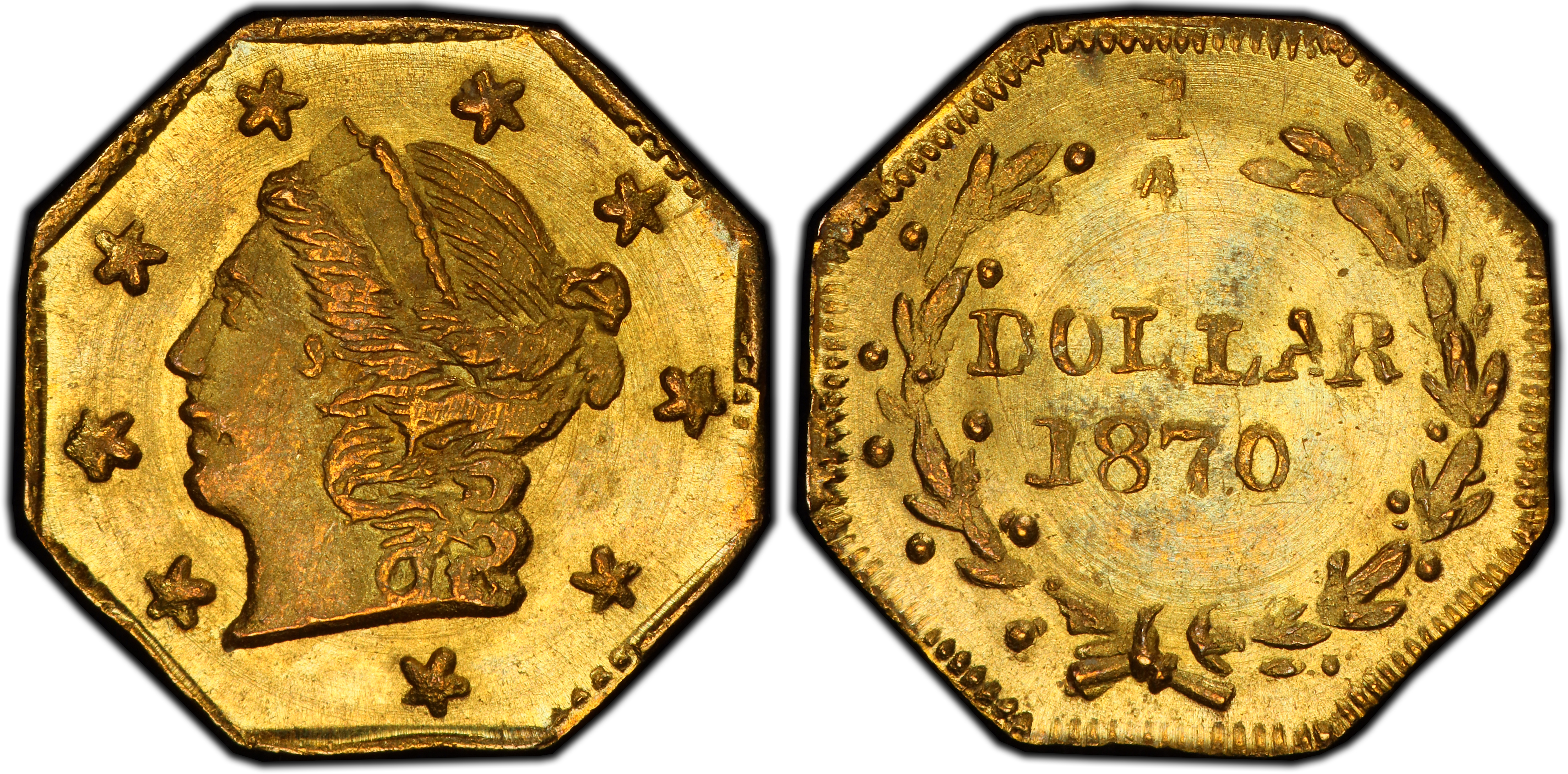
Obverse & Reverse
The 1870 BG-713 25 Cents is a product of the second period of California Fractional Gold production (1858-1882), often termed 'Jeweler's Issues.' By 1870, the acute shortage of small change that characterized the Gold Rush a decade earlier had largely been resolved by the output of the San Francisco Mint. However, the tiny gold pieces, originally conceived as a practical solution to a currency crisis, had found a new and enduring market. They became popular as souvenirs, keepsakes, and items of jewelry, eagerly purchased by locals and tourists captivated by the romance of the Golden State. Unlike the earlier 'Period One' issues which were earnestly intended to circulate, these later pieces were created primarily for this novelty market. The Private Coinage Act of 1864 had officially outlawed the production of private currency, but federal enforcement on the remote West Coast was lax, allowing jewelers in San Francisco to continue minting these fractional pieces with impunity. Production actually increased in the 1870s to meet this collector and tourist demand. These minters, often anonymous, operated with varying degrees of skill, using hand-operated presses or the simple 'hammer method' to strike the tiny gold planchets. The gold content of these pieces was typically less than their face value, a fact that was of little concern to buyers who prized them for their charm and association with the Gold Rush legend rather than their intrinsic worth. It was not until 1883, when Secret Service Chief James J. Brooks cracked down on all private issues, fearing potential for fraud, that the production of California Fractional Gold finally ceased, ending a unique 30-year chapter in American numismatic history.
Associated EventCalifornia Gold Rush Aftermath & Western Expansion
Reason For MintingPrimarily struck to be sold as souvenirs and keepsakes during a period of high interest in the California Gold Rush narrative.
Minter HistoryThe specific minter of BG-713 is unknown, as is typical for many 'Period Two' California Fractional Gold pieces. These were produced by various jewelers in San Francisco who often did not sign their work. Prominent makers were active during this era, but a definitive attribution for this die marriage has not been established. These producers capitalized on the popular demand for gold souvenirs, operating outside of federal law until enforcement was tightened in the early 1880s.
Historical SignificanceThe BG-713 represents the evolution of California Fractional Gold from a necessary circulating medium to a popular collectible and souvenir. It is a tangible artifact of the post-Gold Rush era's economy and culture, reflecting a continued fascination with gold and the romanticism of the West, even as the official need for such pieces had passed. Its existence highlights the limited reach of federal authority in the 19th-century West and the entrepreneurial spirit of the jewelers who created them.
N/A
Denomination25 Cents
Minting Period1870
Assayer/MinterUnknown Jeweler
Geographic OriginSan Francisco, California
Obverse DescriptionA classic Liberty Head design facing left, her hair tied in a bun. The portrait is encircled by 13 five-pointed stars, representing the original colonies.
Obverse Inscription Reverse DescriptionThe denomination '25 CENTS' is displayed within a delicate wreath composed of two branches tied with a bow at the bottom. The legend 'CALIFORNIA GOLD' encircles the wreath above.
Reverse InscriptionCALIFORNIA GOLD 25 CENTS
CompositionGold
Stated Fineness Actual Fineness Weight0.38 grams
Diameter9.30 mm
EdgePlain
Unknown
Survival Estimate46-150
Rarity ScaleR-4 / R-5
This variety appeals to collectors for its classic octagonal shape, attractive Liberty Head design, and its status as a relatively accessible example of the popular 'Jeweler's Issue' period. It serves as a perfect representative of the souvenir phase of this fascinating series.
Key VarietiesThe BG-713 is a specific die marriage and is considered a single variety. No major sub-varieties, contemporary counterfeits, or official restrikes from the original period are widely recognized by numismatists. The collector market focuses solely on genuine, original strikes from 1870.
Authentication TipsAuthentication hinges on comparing the coin to high-resolution images of certified examples. Pay close attention to the exact shape and position of the stars and letters, as well as the style of the portrait and wreath. Genuine pieces have a sharp, albeit sometimes uneven, strike from die minting. Counterfeits are often cast, showing pitting or a soapy appearance, or are modern replicas with incorrect design details. Many fakes are made of brass or have thin gold plating.
Shopping ConsiderationsA premium quality example for its grade will exhibit a bold strike, particularly on Liberty's hair details and the leaves of the wreath. Look for pieces with clean, original surfaces that retain some measure of satiny mint luster. Avoid examples that have been harshly cleaned, polished, or previously mounted in jewelry, which is a common issue for this series. Well-centered strikes command a premium, as off-center strikes are not uncommon. Attractive, gentle toning of a reddish-gold hue enhances eye appeal.
A coin's grade is its condition, rated on a 1-70 scale. For rare coins, this is the most critical factor in determining value, as a tiny difference in preservation can mean a huge difference in price.
Relevant Grade TypesAll original 1870 BG-713 coins are business strikes. They were intended for sale, not circulation in the traditional sense, so they are most commonly found in Mint State (MS, 60-70) grades. Circulated examples (1-58) exist but are less common, as they were typically kept as souvenirs. No official Proof (PR/PF) examples were struck during the original period of issue, although some well-struck examples can have semi-prooflike surfaces.
Mint State CharacteristicsUncirculated examples of BG-713 typically exhibit a soft, satiny luster. The strike can be variable; a key determinant of quality is the sharpness of the stars and the details in Liberty's hair. Due to the hand-production methods, planchet quality can vary, and small, inherent flaws or adjustment marks are sometimes seen. Contact marks, even on high-grade pieces, are common due to the softness of the gold and the way these tiny coins were handled in bulk.
Circulated Wear PatternsWear first appears on the highest points of the design: the hair above Liberty's eye and ear, her cheek, and the high points of the wreath's leaves and bow on the reverse. On moderately worn examples, the stars will begin to lose their sharp points and the central reverse legends will show flatness.
Key Factors For ValueThe primary drivers of value are grade and surface quality. An example with original, undisturbed luster will always be worth significantly more than a cleaned or polished coin of the same technical grade. Strike quality is paramount; a sharply struck coin is highly desirable. Eye appeal, encompassing factors like attractive toning and a clean appearance, plays a major role. For this series, a CAC sticker adds a significant premium, confirming that the coin is of high quality for its assigned grade.
PCGS Price Guide
| Grade | Price | Population |
|---|---|---|
| 58 | $250.00 | 2 |
| 58+ | $255.00 | N/A |
| 60 | $275.00 | N/A |
| 61 | $300.00 | N/A |
| 62 | $340.00 | 3 |
| 62+ | $350.00 | N/A |
| 63 | $400.00 | 17 |
| 63+ | $430.00 | N/A |
| 64 | $550.00 | 26 |
| 64+ | $600.00 | N/A |
| 65 | $725.00 | 23 |
| 65+ | $825.00 | N/A |
| 66 | $1,350.00 | 10 |
| 66+ | $1,600.00 | N/A |
| 67 | $2,250.00 | 4 |