1856 G25C BG-703A (Regular Strike)
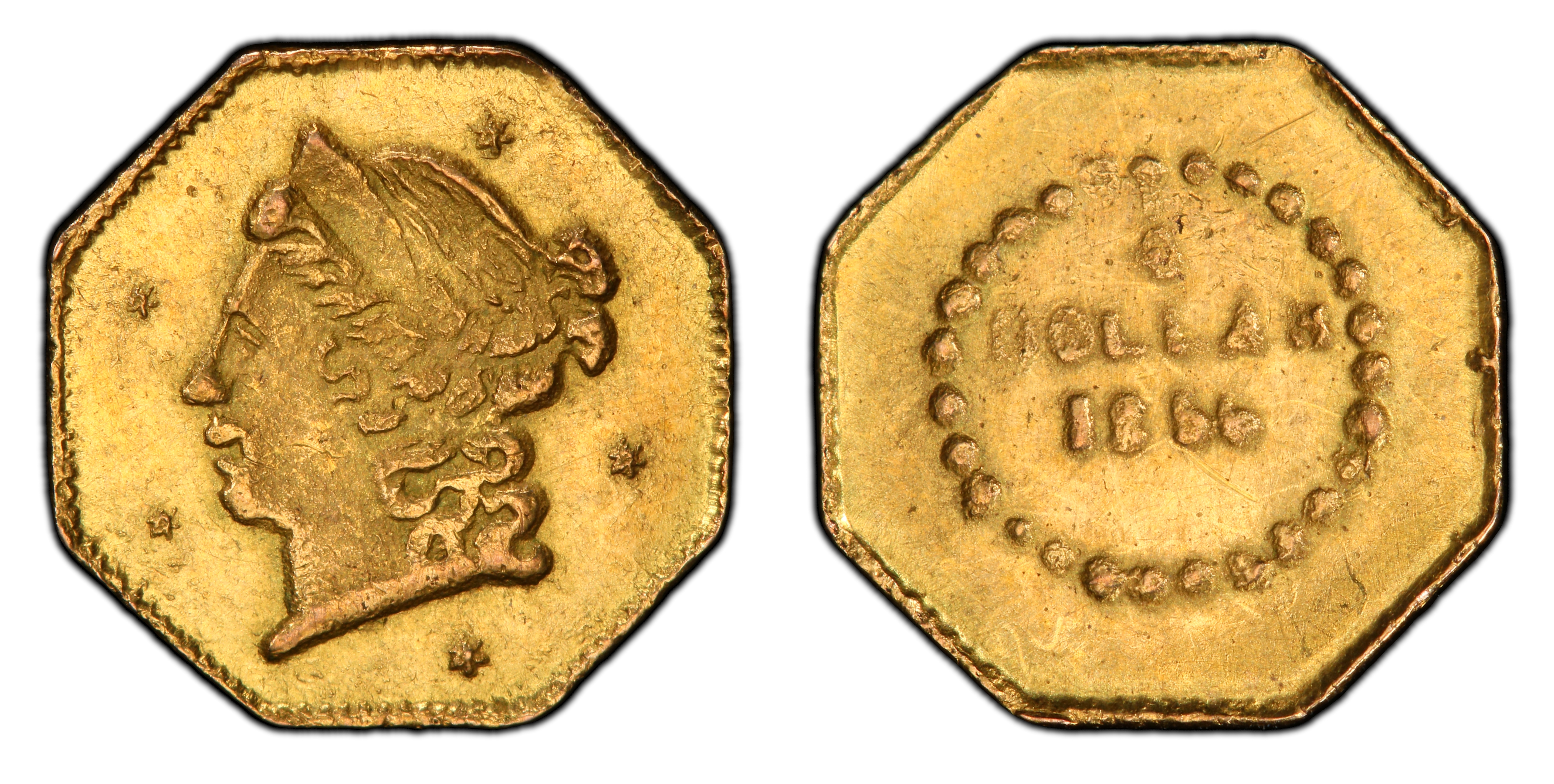
Obverse & Reverse
The 1856 BG-703A octagonal 25-cent piece is a quintessential artifact from what numismatists classify as 'Period One' (1852-1857) of the California Fractional Gold series. This era represents the most legitimate and historically significant phase of this fascinating coinage. The California Gold Rush, which began in 1848, had flooded the region with over 300,000 people by the mid-1850s, creating a booming economy almost overnight. However, this rapid growth created an acute crisis in commerce: a severe shortage of small-denomination coinage. Gold dust, weighed in 'pinches,' was an inaccurate and cumbersome medium of exchange for everyday transactions like buying a drink or a meal. While the United States Assay Office and later the San Francisco Mint (opened in 1854) produced larger denomination gold coins, the supply of federal silver and minor coinage was wholly inadequate. This void spurred private enterprise to fill the gap. Jewelers and metalworkers, many of them French immigrants with horological or engraving skills, began striking their own fractional-denomination gold coins. These pieces, though technically illegal, were born of necessity and tolerated in commerce. The BG-703A was struck by the firm of Hippolyte Gaime and Charles Guillemot, identified by the characteristic 'G G' initials found on some of their other issues. These Period One pieces were intended to mimic the appearance of official U.S. gold coinage to inspire public confidence and were generally produced with a gold content that, while not full-weight, was substantial enough to be accepted in trade. They were typically produced by the 'hammer method,' where dies were struck by hand, leading to variations in strike quality. By 1856, the San Francisco Mint was increasing its output, beginning the end for the necessity of these private issues. Soon, they transitioned from being instruments of commerce to curiosities and souvenirs, but the BG-703A stands as a tangible link to the chaotic, vibrant, and economically strained environment of Gold Rush-era San Francisco.
Associated EventCalifornia Gold Rush
Reason For MintingTo alleviate a severe shortage of small denomination coinage for daily commerce in Gold Rush-era San Francisco.
Minter HistoryHippolyte Gaime and Charles Guillemot were French jewelers and watchmakers operating in San Francisco during the 1850s. Like many skilled craftsmen who immigrated to California, they applied their metallurgical and engraving talents to the lucrative opportunity of private coining. Their firm, Gaime, Guillemot & Co., produced a series of octagonal and round fractional gold pieces, often identified by a distinctive style or the 'G.G.' initials on the obverse of some varieties. Their work is characteristic of the 'Period One' issues, which were created primarily to serve as a circulating medium of exchange before the San Francisco Mint's production could satisfy commercial demand.
Historical SignificanceAs a 'Period One' issue, the BG-703A is significant for having been produced to function as money during the height of the Gold Rush. It represents a grassroots, private-sector solution to a government failure in supplying adequate coinage, embodying the entrepreneurial spirit of the American West. These tiny gold pieces are among the only privately issued coins intended for general circulation in U.S. history.
N/A
Denomination25 Cents
Minting Period1856
Assayer/MinterGaime, Guillemot & Co.
Geographic OriginSan Francisco, California
Obverse DescriptionFeatures a small, classic Liberty Head facing left, similar in style to the contemporary U.S. gold dollar. Her hair is tied in a bun. The head is surrounded by thirteen five-pointed stars, representing the original colonies. The date '1856' appears below the bust.
Obverse Inscription1856
Reverse DescriptionA simple wreath composed of two branches tied with a bow at the bottom. Within the wreath is the denomination '1/4' directly above the word 'DOLLAR'.
Reverse Inscription1/4 DOLLAR
CompositionGold
Stated Fineness Actual FinenessVaries, typically 14-22 Karat native California gold, often with a high silver content.
Weight0.25 grams
Diameter9.50 mm
EdgePlain
Unknown
Survival EstimateFewer than 75
Rarity ScaleR-6 (Very Rare: 31 to 75 known)
The BG-703A is highly sought after as a representative of the historic 'Period One' issues that actually circulated. Its octagonal shape, clear date, and connection to the economic chaos of the Gold Rush make it a tangible piece of Old West history. Its rarity ensures consistent demand among specialists in Territorial and private gold.
Key VarietiesThe primary variety is the regular business strike. No known patterns, proofs, or restrikes from the original period exist. The Breen-Gillio catalog is the authoritative source for die states and minor variations, but no major varieties are widely collected for this specific number.
Authentication TipsGenuine examples are very small and thin. Look for the correct die characteristics: the specific shape of the '5' in the date and the positioning of the fraction relative to the letters in 'DOLLAR'. Counterfeits are common; they are often thicker, have a soapy or cast-like appearance, incorrect weight, and may feature a bear on the reverse (no authentic Period One fractionals have a bear). Weak strikes are common on genuine pieces, so a perfectly sharp strike on all elements should be viewed with suspicion. Authenticate via reputable third-party grading services like PCGS or NGC.
Shopping ConsiderationsA premium quality example for its grade will exhibit a sharp strike, particularly on the stars and the word 'DOLLAR'. Look for original, uncleaned surfaces, which often have a slightly reddish or greenish-gold hue due to the natural alloys in the California gold. Avoid specimens that have been harshly cleaned, polished, or used as jewelry, which is a common fate for these small items. Check for planchet problems like cracks or significant laminations, which can be common due to the crude manufacturing process but should be factored into the price. Eye appeal is paramount; a coin with honest wear and original skin is far more desirable than a higher-grade but heavily processed example.
A coin's grade is its condition, rated on a 1-70 scale. For rare coins, this is the most critical factor in determining value, as a tiny difference in preservation can mean a huge difference in price.
Relevant Grade TypesAll original 1856 BG-703A pieces are business strikes intended for circulation. They are found in Circulated grades (AG-3 to AU-58) and, very rarely, in Mint State (MS-60 to 70). No proofs were struck during the original minting period. Any piece described as a 'Proof' would be a modern creation with no historical value.
Mint State CharacteristicsAn uncirculated BG-703A will exhibit original mint luster, which is typically soft and satiny rather than deeply reflective. The strike is often weak in the center, so a fully struck Liberty Head is rare and desirable. Small, scattered contact marks are to be expected due to the softness of the gold and the crude production methods. Planchet quality is often imperfect, and minor natural flaws do not preclude a Mint State grade.
Circulated Wear PatternsWear first appears on the highest points of the design. On the obverse, this includes Liberty's cheek, the hair above her ear, and the tips of the stars. On the reverse, the highest points of the wreath's leaves and the bow will show the first signs of friction. In lower grades (VG and below), the date and the word 'DOLLAR' will become faint.
Key Factors For ValueThe primary value driver is the grade and surface preservation. An example with original, uncleaned surfaces commands a significant premium over one that has been polished or cleaned. Sharpness of strike is critical; well-struck examples with full details on the stars and wreath are prized. Eye appeal, encompassing attractive natural toning and a lack of distracting marks or planchet flaws, plays a major role. Finally, certification by a top-tier service (PCGS or NGC) is essential for market acceptance and value, with an additional premium for coins approved by CAC.
PCGS Price Guide
| Grade | Price | Population |
|---|---|---|
| 63 | $11,500.00 | 2 |
| 64 | $14,500.00 | 3 |