1854 G50C BG-431 (Regular Strike)
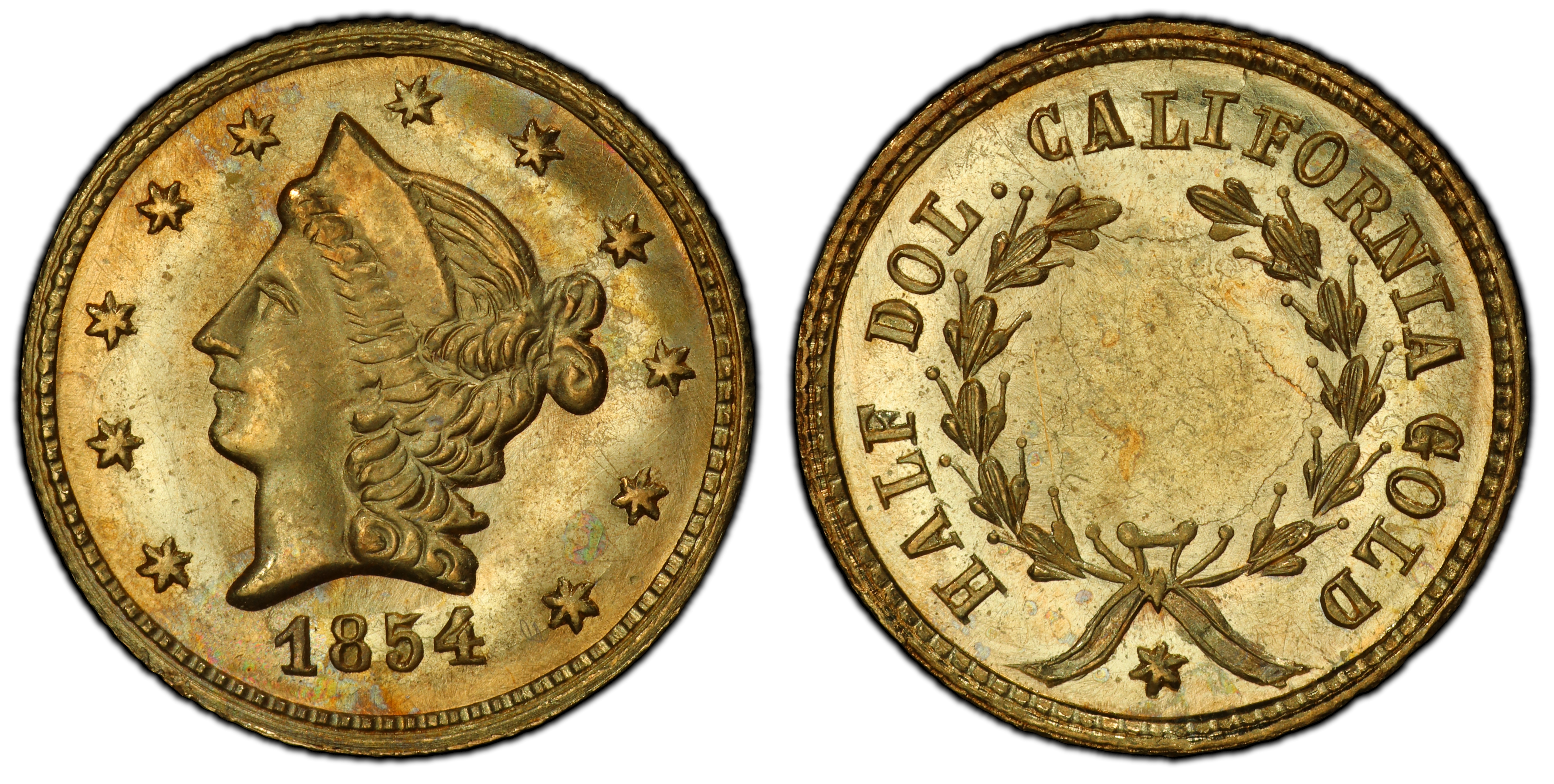
Obverse & Reverse
The 1854 BG-431 50 Cent piece is a quintessential representative of 'Period One' California Fractional Gold, born from the unique economic crucible of the California Gold Rush. Following the discovery of gold at Sutter's Mill in 1848, an immense wave of migration created a population boom and a vibrant, but chaotic, economy. While private minters and eventually the U.S. Mint in San Francisco produced large denomination gold coins from the abundant raw metal, a severe, chronic shortage of small-denomination coinage plagued daily commerce. Transactions for everyday goods and services were often conducted with pinches of gold dust, an imprecise and contentious method. To fill this critical void, jewelers and metalsmiths in San Francisco began striking their own small-denomination coins in 25-cent, 50-cent, and one-dollar values, starting in 1852. These privately issued coins, though not official legal tender, were widely accepted due to dire necessity. The BG-431, struck in 1854, comes from this initial, utilitarian phase. Unlike the later 'jeweler's issues' of Period Two which were often underweight and intended more as souvenirs, Period One fractionals were genuinely intended to circulate and alleviate the small change crisis before the San Francisco Mint could produce sufficient federal coinage. These tiny gold coins facilitated countless minor transactions, from buying a meal to paying for laundry, and were an indispensable part of the Gold Rush economy. Their existence was eventually curtailed by the Coinage Act of 1864, which prohibited private coinage, cementing their status as a fascinating and historically significant chapter in American numismatics.
Associated EventCalifornia Gold Rush
Reason For MintingTo alleviate a severe shortage of small-denomination coinage for daily commercial transactions in Gold Rush-era California.
Minter HistoryThe specific minter or jewelers responsible for the BG-431 variety remains unidentified, a common trait for many Period One California Fractional Gold pieces. During this era, many producers operated without specific mint marks, focusing on function over branding. The crude but effective manufacturing methods, often involving hand-striking with a hammer, meant that attribution to a specific hand is now impossible without further documentary evidence. These anonymous artisans were critical to the functioning of San Francisco's early economy.
Historical SignificanceThe BG-431 and its contemporaries are tangible artifacts of the economic growing pains of the American West. They represent a solution born of necessity, when private enterprise stepped in to provide a fundamental tool of commerce—circulating money—where the federal government had not yet fully established its infrastructure. They are a direct link to the daily lives of the 'Forty-Niners' and settlers who built California.
N/A
Denomination50 Cents
Minting Period1854
Assayer/MinterUnknown Private Minter
Geographic OriginSan Francisco, California
Obverse DescriptionA small, crudely rendered Liberty Head facing left, modeled after the contemporary U.S. gold dollar. The head is surrounded by thirteen stars, which are often poorly defined or incomplete. The date, 1854, appears below the bust truncation.
Obverse Inscription1854
Reverse DescriptionA simple wreath, open at the top, encircles the denomination '1/2'. Uniquely, this variety is known as the 'Empty Wreath' because, unlike many other varieties, the date is not repeated within the wreath. At the bottom, where the wreath's stems would meet, is the word 'DOLLAR'.
Reverse Inscription1/2 DOLLAR
CompositionGold
Stated Fineness Actual FinenessVariable, but Period One issues generally had higher gold content than later periods.
EdgePlain
Unknown
Survival Estimate31-75
Rarity ScaleR-5
The BG-431 is highly sought after as a representative of the earliest, most historically significant period of California Fractional Gold. Its distinct 'Empty Wreath' reverse makes it a specific and desirable catalog variety, while its R-5 rarity ensures persistent demand from specialists in pioneer gold.
Key VarietiesThe primary variety is the regular strike as described. No known official restrikes or patterns exist for this specific privately-issued coin. Collectors should be aware of contemporary counterfeits and modern replicas, which are common for this series. Some genuine pieces may exhibit prooflike surfaces, which are not a separate striking but a result of the manufacturing process with polished dies, and these command a premium.
Authentication TipsAuthenticity is paramount. Genuine BG-431 specimens are very small and thin. The strike is often weak, particularly on Liberty's hair and the stars. The lettering and devices may appear crude or uneven, which can be a marker of authenticity, as modern fakes are often too sharp and uniform. Compare the coin to high-resolution images of certified examples from services like PCGS or NGC. The Breen-Gillio reference work is the definitive guide; if a piece does not match a known variety, it is likely a replica or token. Be wary of pieces with unusual weight, thickness, or a soapy, cast-like appearance.
Shopping ConsiderationsFor a premium quality example, look for a sharp strike for the issue, with as much detail as possible in Liberty's hair and the wreath. Original, lustrous surfaces are highly desirable and scarce; many surviving examples have been cleaned or damaged. An attractive, original reddish-gold or mellow golden patina is prized. Avoid examples that are bent, holed, or show signs of tooling or harsh cleaning, as these significantly impair value. Given the prevalence of counterfeits, purchasing examples certified by a top-tier grading service (PCGS or NGC) is strongly recommended.
A coin's grade is its condition, rated on a 1-70 scale. For rare coins, this is the most critical factor in determining value, as a tiny difference in preservation can mean a huge difference in price.
Relevant Grade TypesAll original BG-431 coins were struck as business strikes for circulation and are found in Circulated (1-58) and Mint State (MS, 60-70) grades. No true Proofs were struck during the original period of issue. Some examples are designated as Prooflike (PL) by grading services if they exhibit mirrored fields from being struck with polished dies, but they are still considered business strikes and not a separate issue.
Mint State CharacteristicsAn uncirculated BG-431 will exhibit original mint luster, though the quality can range from satiny to semi-prooflike. Strike quality is a major factor; these are often weakly struck, so a coin with sharp details on the hair above Liberty's eye and on the wreath's bow is considered a premium example. Due to the softness of the gold and crude production, even high-grade Mint State examples will typically show small planchet flaws or contact marks.
Circulated Wear PatternsWear first appears on the highest points of the design: Liberty's cheek, the hair above her ear, and the upper portions of the wreath on the reverse. On moderately worn examples (VF-XF), the finer details of the hair will be flat, and the stars will begin to merge with the field. In lower grades, the legends and date will become soft and difficult to read.
Key Factors For ValueThe primary value drivers are grade and surface preservation. An example with original, undisturbed luster will command a significant premium over a cleaned or polished coin of the same grade. Strike sharpness is the next critical factor; well-struck specimens are rare and highly valued. Finally, eye appeal, including attractive original toning and a lack of distracting marks or planchet flaws, is key. A CAC sticker for this issue confirms premium quality for the grade and often results in a higher market value.
PCGS Price Guide
| Grade | Price | Population |
|---|---|---|
| 50 | $250.00 | 2 |
| 50+ | $265.00 | N/A |
| 53 | $285.00 | 1 |
| 53+ | $315.00 | N/A |
| 55 | $350.00 | 8 |
| 55+ | $375.00 | N/A |
| 58 | $400.00 | 12 |
| 58+ | $450.00 | N/A |
| 60 | $500.00 | 3 |
| 61 | $575.00 | 4 |
| 62 | $800.00 | 16 |
| 62+ | $950.00 | N/A |
| 63 | $1,400.00 | 13 |
| 63+ | $1,750.00 | N/A |
| 64 | $2,500.00 | 2 |
| 64+ | $3,000.00 | N/A |
| 65 | $3,500.00 | N/A |
| 65+ | $4,000.00 | N/A |
| 66 | $5,000.00 | 1 |