1866 G25C BG-737, PL (Regular Strike)
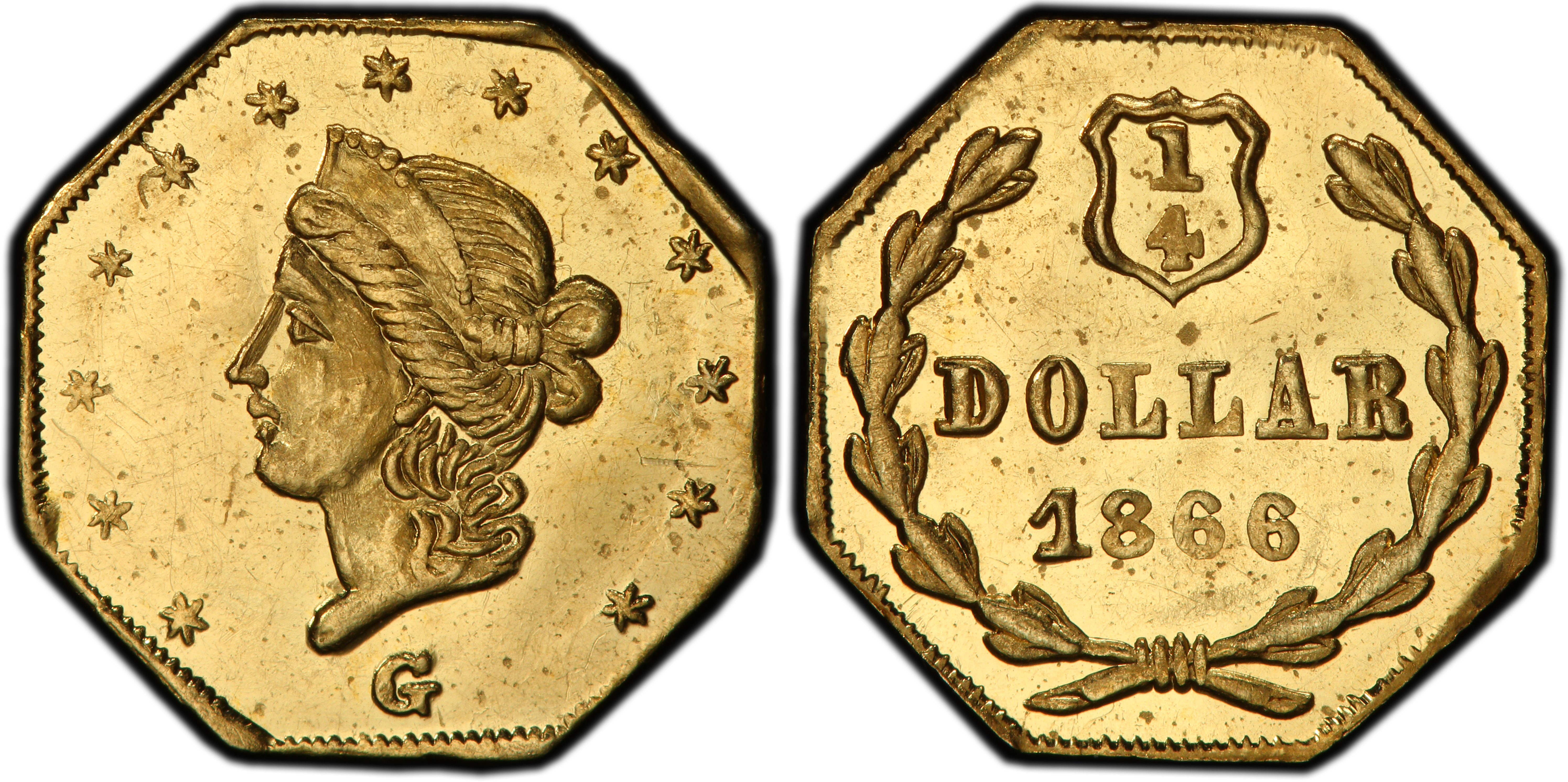
Obverse & Reverse
The 1866 G25C BG-737 is a product of the second period of California Fractional Gold production (1859-1882). Following the initial Gold Rush boom, the immense influx of population created a chronic shortage of small denomination coinage for daily transactions. Gold dust was impractical, and the U.S. Mint in San Francisco, which opened in 1854, primarily focused on larger denominations, failing to alleviate the scarcity of pocket change. Private jewelers and mints stepped into this void beginning in 1852, producing quarter dollar, half dollar, and dollar pieces. These initial 'Period One' issues were generally of good weight and intended to circulate as currency substitutes. However, by the 1860s, the landscape had changed. The Coinage Act of April 22, 1864, officially outlawed private coinage. This legislation, however, was not strictly enforced in California until 1883. In this interim 'Period Two,' the nature of fractional gold shifted. The pieces, including the BG-737, were often significantly underweight for their face value, functioning more as tokens or 'jeweler's issues' than true circulating currency. They were popular as souvenirs, keepsakes, and items to be incorporated into jewelry, reflecting a burgeoning tourist trade and a romantic nostalgia for the Gold Rush heyday. Most were produced in San Francisco by anonymous jewelers who avoided placing identifiable mintmarks on their work to skirt legal repercussions. The production method was typically crude, involving hand-cut dies and a hammer strike, resulting in inconsistent quality and frequent die breaks, characteristics which are hallmarks of the series and essential for modern attribution.
Associated EventPost-Gold Rush Economic Expansion & Federal Coinage Acts
Reason For MintingTo satisfy a continued demand for small denomination coins and serve a growing market for souvenirs and jewelry items after federal law prohibited private coinage.
Minter HistoryThe specific minter for the BG-737 variety is unknown, a common trait for Period Two issues. After the 1864 private coinage ban, manufacturers operated clandestinely to avoid prosecution by the Secret Service. They were typically established San Francisco jewelers who possessed the necessary skills in die-sinking and metallurgy. Their anonymity was a deliberate measure, leaving the coins themselves as the only testament to their work.
Historical SignificanceThe BG-737 represents a transitional phase in California's economic history, where the raw necessity of the Gold Rush gave way to a more established economy that still valued these gold tokens for small-scale commerce and as symbols of the state's golden identity. These 'jeweler's issues' demonstrate a defiance of federal statutes and the persistent regional need and desire for a local form of specie, even if only as a token or souvenir.
N/A
Denomination25 Cents
Minting Period1866
Assayer/MinterUnknown, likely a San Francisco jeweler.
Geographic OriginSan Francisco, California
Obverse DescriptionFeatures a classic Liberty Head design, facing left, with thirteen stars surrounding the portrait. The date '1866' is positioned below the bust. The portrait style is crude, typical of the privately produced issues of the era.
Obverse Inscription1866
Reverse DescriptionA simple wreath design encircles the denomination. The denomination is expressed as '1/4 DOLLAR' with 'CAL.' above it, all contained within the wreath.
Reverse InscriptionCAL. 1/4 DOLLAR
CompositionGold
Stated Fineness Actual FinenessVaries, typically 14 to 22 karats.
Weight0.25 grams
Diameter9.50 mm
EdgePlain
Unknown
Survival EstimateFewer than 75 believed to exist.
Rarity ScaleR-7 (4-12 known)
This coin is highly sought after due to its extreme rarity (R-7). As a 'Period Two' issue, it tells the story of the post-Gold Rush era and the curious legal gray area these 'jeweler's pieces' occupied. The octagonal shape and classic Liberty design make it a visually appealing representative of the series.
Key VarietiesThe primary variety is the regular business strike. A Prooflike (PL) designation is sometimes assigned by grading services to examples with exceptionally reflective surfaces from polished dies, but these are not distinct proof strikings. No known restrikes or patterns exist for this specific variety. The Breen-Gillio (BG) catalog is the definitive reference, and BG-737 is the sole variety for this specific die marriage.
Authentication TipsGenuine examples often exhibit a somewhat crude, uneven strike due to the hammer-striking process. Look for die rust pits and shallow planchet voids, which are characteristic of this issue and considered 'as made'. Counterfeits are common; many are gold-plated base metal and feel lighter than expected. Others are modern gold copies that often have a mushy or soapy appearance and incorrect die characteristics. Weaknesses in the strike are a good sign of authenticity, whereas modern fakes are often sharply and evenly struck. All questionable pieces should be authenticated by a major third-party grading service.
Shopping ConsiderationsA premium quality example for its grade will display a sharp strike for the issue, particularly on Liberty's hair details and the numerals of the date. Original, uncleaned surfaces with a hint of reddish-gold or lilac toning are highly desirable. Check carefully for evidence of having been mounted in jewelry, such as rim damage, solder marks, or excessive polishing. Planchet quality is a key consideration; examples with minimal 'as-made' voids or rust pits command a premium. Given the rarity, any example without significant post-mint damage is a prize.
A coin's grade is its condition, rated on a 1-70 scale. For rare coins, this is the most critical factor in determining value, as a tiny difference in preservation can mean a huge difference in price.
Relevant Grade TypesAll original examples of BG-737 were struck as business strikes for potential, albeit limited, circulation or use as souvenirs. They are found in Circulated grades (AG-3 to AU-58) and Mint State (MS, 60-70). No true Proofs were struck during the original period of issue. The 'PL' (Prooflike) designation refers to business strikes made with polished dies that exhibit mirrored fields, but they are not a separate striking and are graded on the same 70-point scale as regular Mint State coins.
Mint State CharacteristicsUncirculated examples of BG-737 often show weakness in the strike, a result of the hammer-striking method. Luster is typically satiny rather than deeply frosty. Due to the softness of the gold and loose handling, even high-grade Mint State coins will often display small contact marks or 'ticks.' Die state is important; early strikes will be sharper and may show prooflike surfaces, while later strikes may show evidence of die fatigue or cracks.
Circulated Wear PatternsWear first appears on the highest points of the design: the hair above Liberty's eye and ear, her cheekbone, and the highest leaves in the wreath on the reverse. On moderately worn examples, the finer details of the hair and leaves will merge. In lower grades, the stars and legends become faint, with the date being one of the last elements to wear away completely.
Key Factors For ValueRarity is the primary driver of value for this R-7 variety. Beyond that, surface quality is paramount; an example with original, undisturbed luster and skin will command a significant premium over one that has been cleaned, polished, or previously mounted in jewelry. Strike quality is also critical; a coin with a bold strike on the central devices is far more desirable. Eye appeal, enhanced by attractive original toning, can add a substantial premium. A CAC sticker for this issue indicates premium quality for the grade and is highly valued by discerning collectors.
PCGS Price Guide
| Grade | Price | Population |
|---|---|---|
| 64 | $3,500.00 | 1 |
| 65 | N/A | N/A |